Alopecia Areata
An authoritative clinical profile of Alopecia Areata covering AAD 2022 guidelines, CD8+ T-cell immune privilege collapse mechanics, systemic JAK inhibitor safety monitoring, and cicatricial alopecia differential boundaries.
Editorial review complete
Independent clinical validation is pending.
Quick Reference Facts
Visual guide
 Homeo Healthcare
 Homeo Healthcare
 Homeo Healthcare
In simple words
Alopecia (hair loss) Areata (AA) is an autoimmune non-scarring hair loss condition characterized by well-demarcated patches of hair loss on the scalp or body [D0035-KEYNOTES, CIT-0059]. AAD 2022 guidelines detail topical, intralesional, and systemic targeted immunomodulatory care.
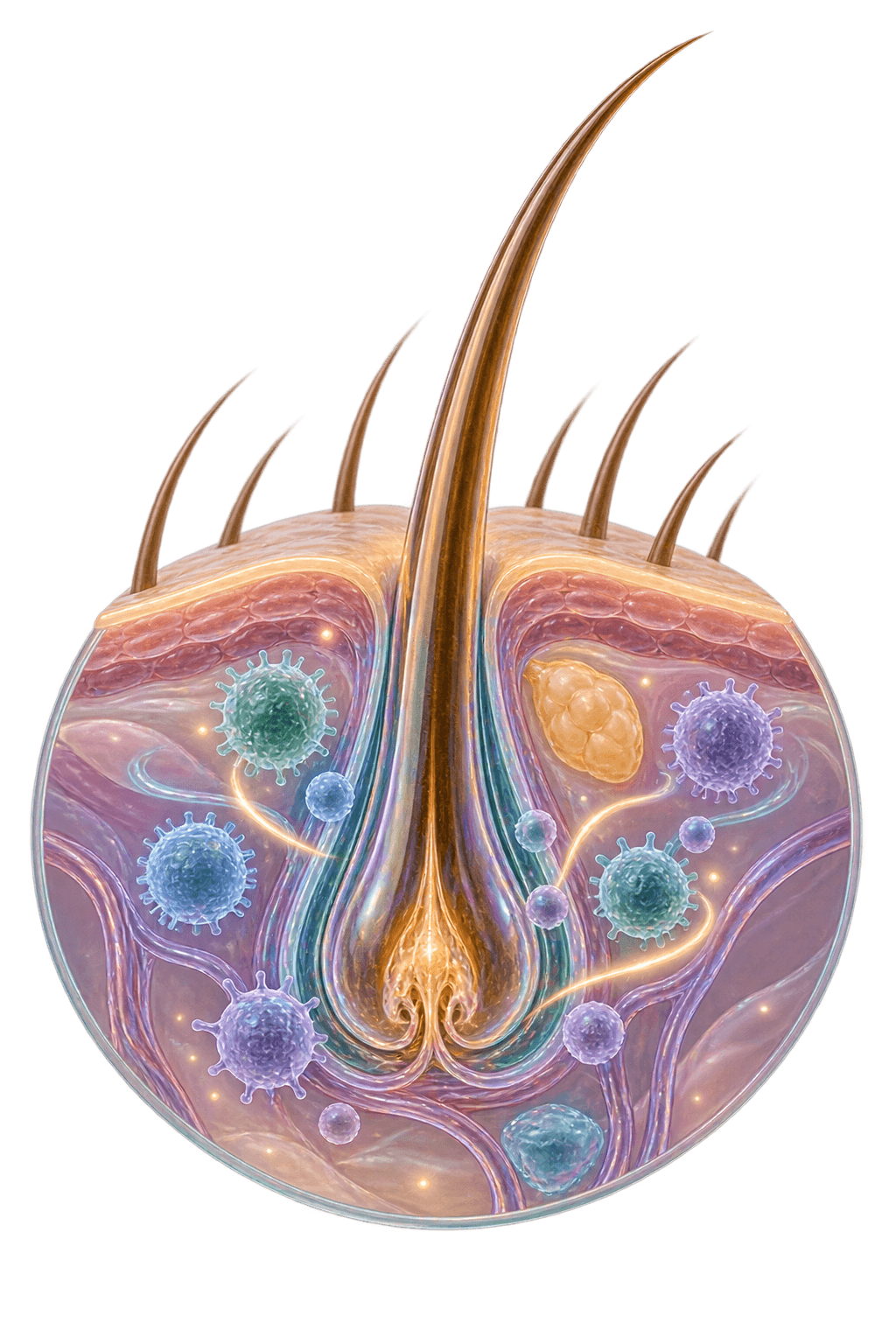
An autoimmune disease of hair follicles driven by breakdown of immune privilege in the anagen hair bulb, mediated by CD8+ NKG2D+ T-lymphocytes, leading to hair cycle disruption without follicular scarring.
Common causes
- Autoimmune attack against hair follicle autoantigens following collapse of hair follicle immune privilege [D0035-KEYNOTES, CIT-0059]
- Interferon-gamma (IFN-γ) and IL-15 pro-inflammatory signaling pathways
- Genetic susceptibility (HLA-DRB1, DQB1) combined with environmental triggers (viral infection, acute psychological stress)
Risk Factors
- Family history of Alopecia Areata or personal history of autoimmune disorders (Vitiligo, Hashimoto's Thyroiditis, Type 1 Diabetes, Celiac Disease)
- Atopic diathesis (eczema, allergic rhinitis, asthma)
- Severe acute emotional trauma or physical systemic illness
Common symptoms
- Abrupt onset of smooth, round or oval non-scarring patches of complete hair loss [D0035-KEYNOTES, CIT-0059]
- Presence of short, tapered 'exclamation mark hairs' at the periphery of expanding lesions
- Nail changes: Pitting, trachyonychia (rough nails), red lunulae, and longitudinal ridging
Lifestyle & diet support
Protect exposed scalp patches with sunblock (SPF 30+) or headwear, avoid harsh chemical hair treatments, practice stress reduction, and maintain balanced nutrition.
Treatment Approaches
Conventional Management
Management options include intralesional corticosteroid injections (triamcinolone acetonide), topical high-potency corticosteroids, topical immunotherapy (DPCP), topical minoxidil, and oral Janus Kinase (JAK) inhibitors (baricitinib, ritlecitinib) for severe extensive disease [CIT-0059].
Homeopathic Approach
Homeopathic remedies (such as Acidum Flouricum, Phosphorus, Natrum Muriaticum, Lycopodium, Vinca Minor) serve as supportive constitutional care to modulate immune reactivity, encourage follicular regrowth, and address emotional stress alongside dermatological care.
Frequently Asked Questions
Clinical & academic detailShow detailHide detail
Diagnosis & tests
Investigation Protocol
Diagnosed by clinical inspection and dermoscopy (trichoscopy showing yellow dots, black dots, exclamation mark hairs). Scalp biopsy and screening for thyroid autoantibodies (TPO) and serum TSH are performed when co-occurring systemic autoimmunity is suspected [CIT-0059].
Differential Diagnosis
Differentiate Alopecia Areata from Tinea Capitis (fungal infection with scaling/black dots), Trichotillomania (hair-pulling disorder), Telogen Effluvium, Androgenetic Alopecia, and Cicatricial Scarring Alopecia (Lichen Planopilaris, Discoid Lupus).
Differential Diagnosis Matrix
Differentiate Alopecia Areata from Tinea Capitis (fungal infection with scaling/black dots), Trichotillomania (hair-pulling disorder), Telogen Effluvium, Androgenetic Alopecia, and Cicatricial Scarring Alopecia (Lichen Planopilaris, Discoid Lupus).
Reference Citations & Evidence Sources
Clinical Guidelines & Consensus Statements
Materia Medica & Keynotes
- CIT-0004Hahnemann S.. "Materia Medica Pura." Adolph Arnold (1811).
- CIT-0005Kent J. T.. "Lectures on Homoeopathic Materia Medica." Boericke & Tafel (1905).
- CIT-0006Boericke W.. "Pocket Manual of Homoeopathic Materia Medica." Boericke & Runyon (1901).
No clinical connections registered for this topic.
Seeking Expert Consultation?
Book an online video session with Dr. Narayan Jethwani to get an individualized constitutional homeopathic protocol tailored to your case.
Medical Safety Disclaimer
All content on the Homeo Healthcare platform is strictly for educational purposes and is not personal medical advice, diagnosis, or treatment. Homeopathic remedy considerations are provided for clinician review or require individualized consultation with a qualified physician. Never delay seeking professional medical advice or emergency medical care due to content you have read on this website.